
Advanced Certificate Programme in Agentic AI and RAG Engineering
Avail this Early Enrolment Benefit of Invalid liquid databefore the Upcoming Deadline of Invalid liquid data
Invalid liquid data (Applicable Taxes will be charged at checkout)
A Curriculum Designed by Domain Experts, Powered by IITM Pravartak

Note:
Schedule for faculty masterclass will be shared post programme orientation.
Most comprehensive programme among educators offering Agentic AI and RAG technical certificate programmes.
Engineer the Next Generation of AI with Agentic and RAG Systems
As organisations accelerate AI adoption, professionals across technology, product, and business roles increasingly need to understand how these systems work - so they can design, implement, and lead AI-driven initiatives while staying competitive in an AI-powered landscape.
80%
20x
50%
Note:
Salaries for AI roles in India are among the highest in the country. Your salary will vary based on your skills, experience, and the city where you work.
What this Agentic AI and RAG Engineering Course About?
The Advanced Certificate Programme in Agentic AI and RAG Engineering by IITM Pravartak is a 7-month course (Programme fee: INR 1,39,900 + GST / AED 6230) uniquely designed to provide in-depth engineering expertise in both Agentic AI and RAG systems together.
Across the programme duration, you will learn to:
Design and implement multi-agent systems using LangGraph, LlamaIndex, and vector databases.
Build advanced RAG pipelines with memory layers, evaluation frameworks, and structured outputs
Learn through hands-on assignments and a comprehensive, end-to-end capstone project
Engage in a production-driven curriculum delivered through weekly live sessions led by domain experts with extensive industry experience
Attend IITM Pravartak masterclasses and opt for an immersive campus experience
Built for professionals who want to move beyond prototypes and engineer reliable AI systems ready for real-world deployment.
What are the Unique Highlights of this Agentic AI and RAG Course by IITM Pravartak?

Live Online Sessions by Domain Experts
Weekly domain expert-led sessions with hands-on walk-throughs of tools, techniques, and real-world applications

IITM Pravartak Certification
A verified digital certificate upon successful programme completion

IITM Pravartak Lead Faculty Masterclasses*
Learn directly from Prof. Madhusudhanan B via select live masterclasses

3 IBM Industry Certificates
Additional credentials in Retrieval-Augmented Generation, LangChain, and AI Agent Development

15+ Tools and Frameworks
Langfuse, OpenAI API, Hugging Face, Tavily, and more

IITM Research Park Immersion
Two-day campus immersion event at IIT Madras Research Park (Optional)

Capstone Project
Solve complex industry problems through a comprehensive capstone project

Career Services Support
Career preparation modules including, job strategy, resume and cover letter essentials, and more

Build-from-Scratch Oriented Curriculum
Build a RAG pipeline and ReAct agent from scratch

Focus on 8 Production KPIs of Agentic Systems
Track 8 production KPIs (from Week 1) across the programme duration

Focus on Cost Engineering in Agent Production
Dedicated week on operating AI systems economically
Note:
The entire programme curriculum will be taught by Domain Experts and will also include a select live exclusive masterclasses by IITM Pravartak Lead faculty.
All programme highlights stated in this section and across the programme are subject to change at the discretion of IITM Pravartak and Emeritus.
Only participants who have successfully completed the programme will be allowed to visit the IITM Research Park.
Overall, 50% attendance required for live sessions to achieve programme completion. Live sessions include both domain expert sessions and lead faculty masterclasses.
Domain expert is the programme leader responsible for conducting weekly live sessions.
The immersion will only be conducted with a minimum number of learners signing up.
Schedule for faculty masterclass will be shared post programme orientation.
How this Programme Compares to Other Agentic AI and RAG Courses?
Building next-generation AI systems today requires more than an understanding of prompts or workflows. It demands professionals who can design, orchestrate, deploy, and govern autonomous AI systems end to end. With this programme, you move beyond experimentation and develop the capability to architect production-grade multi-agent systems with retrieval, memory, and scalable deployment.
Advanced Certificate Programme in Agentic AI and RAG Engineering | Other Outdated/Non-Accredited GenAI and Agentic AI Programmes | |
|---|---|---|
Duration and Learning Mode | 7-month programme with live online sessions on the weekends - perfect for working professionals who want flexible learning | 2–3-month programmes that condense learning and teach using only pre-recorded lectures (and don't contain in-depth lectures on RAG engineering) |
Certification from a Top Ranked Institution | Industry certificate from IITM Pravartak; 3 IBM certifications focused on RAG, LangChain, and AI Agent Engineering | Certification from non-accredited or low ranked institutes and additional certifications are rarely offered or come with add-on costs |
Programme Structure | Structured 7-month engineering-first curriculum designed for building and deploying production-grade Agentic AI systems | Short-duration programmes primarily focused on prompting or basic RAG concepts without full systems integration |
Depth of Curriculum | Comprehensive coverage across reasoning workflows, multi-agent orchestration, memory tiers, evaluation frameworks, observability, and scalable deployment stacks | Conceptual and theory-driven learning with introductory exposure to embeddings, agents, and context handling |
Capstone and Projects | End-to-end production capstone with hands-on assignments covering multi-agent systems, advanced RAG pipelines, and deployment workflows | 1-2-week capstone and limited projects focused on isolated features without lifecycle deployment |
Advanced Tools and Frameworks | Hands-on execution using industry-grade frameworks such as Langfuse, LangGraph, Tavily, OpenAI API, vector databases, FastAPI, and Qdrant | High-level automation or low-code tools taught under workflow-first approaches with limited production exposure |
Notes:
The entire programme curriculum will be taught by Domain Experts and will also include a select live exclusive masterclasses by IITM Pravartak Lead Faculty.
Schedule for faculty masterclass will be shared post programme orientation.
Who can Benefit from this Agentic AI and RAG Engineering Course?
The Agentic AI and RAG Engineering course by IITM Pravartak is designed for professionals across engineering, data, and technology-driven roles who are ready to architect, build, and deploy production-grade Agentic AI and RAG systems in real-world environments.
Specifically, this programme is ideal for:
Data Science, AI, and Engineering Professionals
Software engineers, AI/ML engineers, data engineers, backend developers, and solution architects looking to move beyond model experimentation into designing multi-agent systems, advanced RAG pipelines, and deployable AI services using Python and modern orchestration frameworks.
Product and Technical Leaders
Technical product managers, platform leads, and innovation heads responsible for integrating AI into enterprise systems and seeking structured expertise in agent architectures, evaluation, deployment, and governance.
Mid-Career Technology Professionals
Professionals with prior exposure to programming, APIs, or backend systems who want to upskill into Agentic AI engineering and transition into high-impact AI system design roles.
This is an engineering-focused programme. While foundational concepts are reinforced, prior exposure to Python programming is required, and strong technical problem-solving skills are recommended to fully benefit from the depth of multi-agent orchestration, RAG engineering, and deployment modules.
With This Programme, You Will Be Able To:
Design and deploy intelligent multi-agent systems capable of reasoning, planning, and coordinated execution
Build advanced RAG pipelines with memory layers, evaluation frameworks, and structured outputs
Engineer reliable AI services using production deployment stacks, including APIs, containers, and monitoring tools
Implement secure, governed, and cost-aware AI systems aligned with real-world performance constraints
Position yourself as an AI Systems Engineer or Agentic AI Architect capable of leading next-generation autonomous AI initiatives
Eligibility criteria for this programme:
Minimum Graduate (10+2+3) and diploma holders with a minimum of 5 years of work experience; programming knowledge required
What is the Curriculum for this Agentic AI and RAG Course by IITM Pravartak
Module 1: AI Systems Thinking and Decision Frameworks
What Agentic AI is (and isn’t)
LLM as a system component
Choosing between RAG, fine-tuning, long-context, and agents
8 Production KPIs
Live demo: Production RAG and agent system
Agent solution framing canvas
Module 2: Python for AI Engineering
Python—APIs, concurrency, and Pydantic
File handling, logging, config, secrets
LLM-assisted coding workflows
Module 3: FastAPI and Testing Introduction
FastAPI—streaming, background tasks, and validation
Logging and tracing hooks
UI integration
Testing Vs Evaluation distinction
Module 4: LLM Application Foundations and Model Landscape
LLM APIs - Tokens, cost, and latency
Structured outputs and tool-calling
Streaming, retries, and timeouts
Model selection - closed Vs open-weights
Local model integration
Module 5: Prompting and Evaluation Literacy
Structured, tool-aware, and few-shot prompting
Evaluating non-deterministic outputs
LLMs-as-judge
Pairwise comparison
Rubric-based evaluations
Golden dataset construction
Critic-Creator prompt loop
Use-case discovery exercise
Module 6: Naive RAG from Scratch
Why RAG - and when not to use it
Build a RAG pipeline from first principles
Embeddings and similarity by hand
KPI tracking begins
Module 7: Embeddings and Vector DBs
Embedding model selection
Vector database trade-offs
Similarity metrics
Index structures
Module 8: Document Ingestion and PII Awareness
Multi-format ingestion—PDF, HTML, Docx
Chunking strategies
Metadata enrichment
PII detection and compliance
Module 9: Advanced Retrieval
Hybrid search
Reranking
Query rewriting and expansion
Multi-query retrieval
Retrieval framework integration
Module 10: RAG Optimisation, Caching and Knowledge Base Lifecycle
Prompt and context compression
Multi-layer caching strategies
Knowledge base lifecycle management
Versioning and drift handling
Module 11: RAG Evaluation (Applied)
Retrieval and generation quality metrics
Evaluation frameworks
Evaluation as a code
Module 12: RAG Debugging Lab
Failure taxonomy for RAG systems
Systematic debugging workflow
Trace reading
Cost analysis
Module 13: Tool Calling, API Agents, and Structured Data
Function calling — design and implementation
Tool reliability principles
API-calling agents
Text-to-SQL
Web search integration
Data operations and audit logging
Module 14: Raw Agent Loop, Failure-Oriented Design, and Testing Deep Dive
Build a working agent from scratch
Agent control loops and safety guards
Failure-Oriented Design — failure types and defenses
Testing agents — unit, integration, mocking
Module 15: Agent Memory Systems
Memory types and selection
When not to add memory
Retrieval and forgetting strategies
Module 16: Agent Workflows with LangGraph
State machine design for agents
Deterministic Vs agentic routing
Guardrail node patterns
Parallel workflow execution
Module 17: Planning, Reasoning, Streaming UX, and Human-in-the-Loop
Planner-executor patterns
Reflection and self-correction
Streaming agent UX
Human oversight — approval gates, escalation, audit trails
Module 18: Agents, RAG, and Injection Defense
Retrieval-as-a-tool; Grounded agents with citation
Prompt injection — types and defenses
Data exfiltration prevention
Multi-source retrieval orchestration
Module 19: Multi-Agent Reality Check
When NOT to use multi-agent
Cost and complexity trade-offs
Single-agent alternatives
Decision framework
Module 20: Multi-Agent Architectures
Supervisor-worker, planner-executor, debate patterns
Role and tool partitioning
Orchestration frameworks
Module 21: Coordination and Communication
Shared state and message passing
Delegation and aggregation
Deadlocks, cascade failures, circular delegation
Coordination primitives
Module 22: Multi-Agent Debugging Lab
Cross-agent tracing
Non-deterministic bug reproduction
Cost explosion diagnosis
Load testing
Module 23: MCP Fundamentals
MCP as an emerging integration standard
Client/server architecture
Transport and security model
When to use MCP vs direct tool-calling
Module 24: Build an MCP Server
Build and expose a custom MCP server
Agent-to-MCP integration
Trade-off analysis
Module 25: Observability for AI Systems
Logging, tracing, and metrics for AI
Hands-on instrumentation
Cross-system tracing
Observability as a failure-detection surface
Module 26: Evaluation in Production, Versioning, and Regression Testing
Online vs offline evaluation
Prompt and model versioning
Regression testing
Shadow deployments and A/B testing
Module 27: Cost Engineering, Routing, and System Economics
Cost breakdown by component
Model routing and cascading
Budget controls
Queue systems
Local model deployment
SLA/SLO definition
Module 28: Responsible AI, Security, and Compliance
Hallucination mitigation
AI guardrails
Security consolidation
DPDP Act, GDPR
Audit trails and data residency
Module 29: Deployment and CI/CD
Containerisation for AI
Prompt, model, and dataset versioning
CI/CD pipelines with eval gates
Deployment strategies
Production operations
Module 30: Capstone Demo, Architecture Review, and Path Forward
Production system presentations
Reading AI research critically
Agent benchmark literacy
Career next steps
Note:
All programme curriculum - topics, modules, submodules, tools — stated here is subject to change as per the discretion of IITM Pravartak or Emeritus.
The entire programme curriculum will be taught by Domain Experts and will also include a few live exclusive masterclasses by IITM Pravartak Lead faculty.
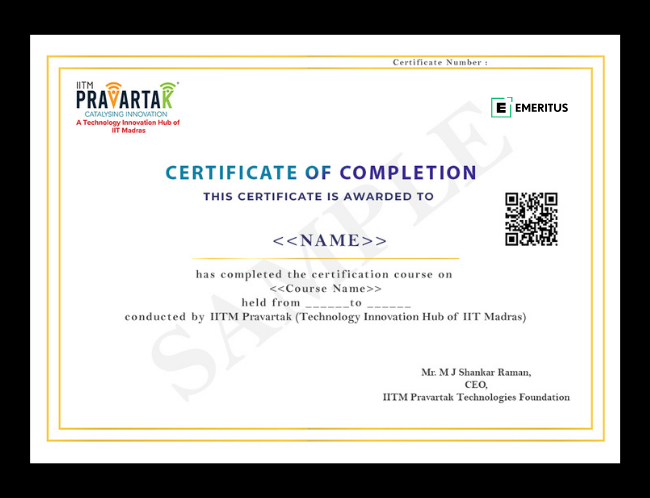
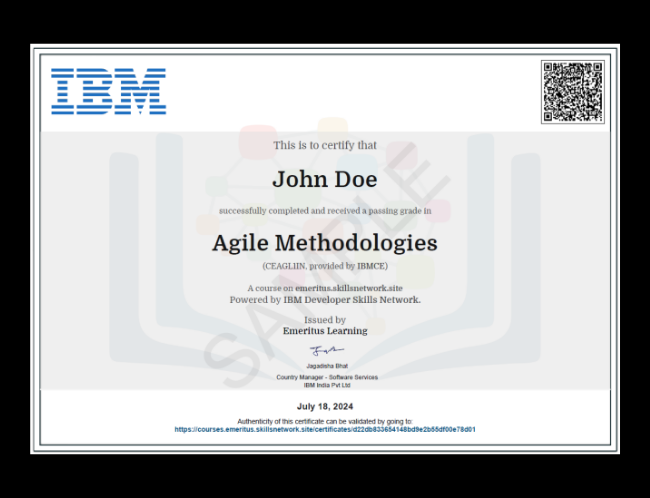
Agentic AI and RAG Certifications Offered by IITM Pravartak and IBM
Note:
All certificate images are for illustrative purposes only and may be subject to change at the discretion of IITM Pravartak and IBM.
To receive the completion certificate, participants must score a minimum of 70% overall on mandatory assignments and successfully complete the capstone project.
Overall, 50% attendance in both domain-expert led live sessions and live lead faculty masterclasses are required to achieve programme completion.
Which Tools Will Be Used to Apply Agentic AI and RAG Concepts?


Note:
This page highlights only a selection of tools from a more extensive list available.
All product and organisation names are trademarks or registered trademarks of their respective holders, and their use does not imply any affiliation with or endorsement by them.
Tools will be provided via virtual labs for learning, as per the curriculum. Access will be given when the respective modules are taught.
Gain Credentials from IBM, a Pioneer in AI and ML Technology
Certificate 1: RAG - Build Apps with LangChain and LlamaIndex
Introduction to RAG
Build Applications with RAG
Build RAG Applications with LlamaIndex
Certificate 2: RAG - Vector Databases with ChromaDB
Introduction to Vector Databases and Chroma DB
Vector Databases for Recommendation Systems and RAG
Certificate 3: Building AI Agents with RAG and LangChain
RAG Framework
Prompt Engineering and LangChain
Note:
All programme curriculum stated here is subject to change as per the discretion of IITM Pravartak, Emeritus, or IBM.
Learn Agentic AI and RAG with Masterclasses from Renowned IITM Pravartak Lead Faculty
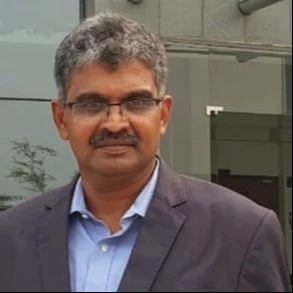
Prof. Madhusudhanan Baskaran
Lead Faculty, IITM Pravartak
- Ph.D. Degree in Wireless Sensor Network with Artificial Intelligence from Anna University
- M.Tech. Degree in Computer Science and Engineering from M.Kumarasamy College OF E...
Emeritus Career Services Benefits
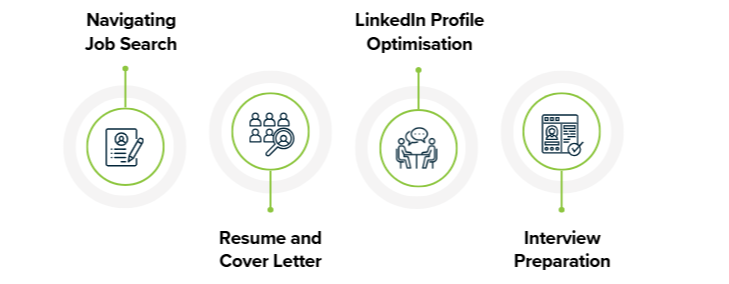
15 recorded sessions and resources in the above categories
Guidance on Job Search Navigation: Learn to maximise your chances of hiring by navigating the job search process efficienctly - with expert insights.
LinkedIn Profile Optimisation: Become visible to recruiters in your target company by analysing the gaps in your profile and optimising the for the right elements that employers want to see.
Career Preparation Modules: Explore dedicated preparation modules and resources that can help you present your core skillset to recruiters in a much more polished format.
Resume builder tool: Access smart resume and cover letter creation automation that intelligently brings together your newly acquired skills over the course duation and your career journey so far to craft a seamless, job-ready proposition for recruiter evaluation.
Notes:
IITM Pravartak or Emeritus do NOT promise or guarantee a job or progression in your current job. Career Services are only offered as a service that empowers you to manage your career proactively.
The Career Services mentioned here are offered by Emeritus. IITM Pravartak is NOT involved in any way and makes no commitments regarding the Career Services mentioned here.
This service is available only for Indian residents enrolled into selected Emeritus programmes.
System Requirements to Pursue the Programme
Laptop/desktop with Windows 10/11 (64-bit) or Ubuntu 20.04+ or macOS 12 or above, minimum 8 GB RAM (16 GB recommended)
4-core Intel i5/i7 or AMD equivalent or Apple Silicon (M1/M2/M3 or above),
120 GB free SSD storage for windows/linux or 30GB free disk space for MacOS
Ability to install Python, Docker, and VM
Stable internet connection
Note:
Learners must have a personal system meeting minimum hardware and virtualisation requirements to run hands-on labs. Company-issued, restricted, or low-spec devices (e.g., 8 GB RAM) may not support all lab activities.
What are Some Frequently Asked Questions About this Agentic AI and RAG Course?
What is the Advanced Certificate Programme in Agentic AI and RAG Engineering?
The Advanced Certificate Programme in Agentic AI and RAG Engineering by IITM Pravartak is a 7-month live online programme designed for professionals who want to build production-ready AI systems. The programme focuses on two of the most important areas shaping modern AI applications today: Agentic AI and Retrieval-Augmented Generation (RAG).
Participants learn how to design multi-agent systems, build advanced RAG pipelines, integrate memory and tools, and deploy scalable AI services. Through live sessions led by domain experts, hands-on assignments, projects, and a capstone project, learners gain practical experience in building AI systems that can reason, retrieve information, and execute tasks autonomously.
Unlike many AI programmes that focus only on prompt engineering or model usage, this programme takes an engineering-first approach and emphasises the design, deployment, and governance of real-world AI systems.
Who should attend this Agentic AI and RAG Engineering programme?
This programme is designed for technology professionals who want to deepen their expertise in modern AI system design and deployment. It is particularly relevant for software engineers, AI/ML engineers, data engineers, backend developers, solution architects, technical product managers, platform leads, and innovation professionals.
The curriculum is best suited for individuals who already have some exposure to programming and want to move beyond experimentation with AI tools to building production-ready systems. Professionals interested in multi-agent systems, enterprise AI applications, retrieval systems, and AI engineering workflows will find the programme especially valuable.
Whether your goal is to transition into AI systems engineering or strengthen your ability to design and deploy AI solutions within your organisation, the programme provides a structured pathway to build these capabilities.
Why should professionals learn Agentic AI and RAG Engineering today?
Organisations are rapidly moving beyond standalone AI tools and chatbots towards intelligent systems that can reason, retrieve information, use external tools, and execute tasks autonomously. These systems increasingly combine Agentic AI and RAG architectures to improve reliability, accuracy, and automation.
As AI adoption accelerates across industries, professionals who understand how to build and deploy these systems are becoming increasingly valuable. Businesses are looking for individuals who can bridge the gap between AI models and real-world applications by creating scalable, production-ready solutions.
Learning Agentic AI and RAG Engineering helps professionals develop practical skills that are directly applicable to the next generation of enterprise AI systems and positions them to contribute to high-impact AI initiatives.
How is this RAG programme by IITM Pravartak different from other Generative AI or Agentic AI courses?
Many Generative AI programmes focus primarily on prompt engineering, model usage, or AI-powered productivity tools. While these skills are important, they represent only one part of the AI ecosystem.
The Advanced Certificate Programme in Agentic AI & RAG Engineering goes significantly deeper by focusing on how AI systems are designed, orchestrated, deployed, and governed. Learners explore topics such as multi-agent architectures, retrieval systems, memory design, orchestration frameworks, evaluation, observability, deployment, and AI governance.
A key differentiator is the programme's combined focus on both Agentic AI and RAG Engineering. This reflects how modern enterprise AI applications are increasingly built and gives learners a more comprehensive understanding of AI system design than programmes focused on a single area.
What will I learn in this Agentic AI and RAG certification programme?
The Agentic AI and RAG certification programme covers the complete lifecycle of building modern AI systems. Participants begin by strengthening their understanding of AI system design fundamentals before progressing to advanced topics in Agentic AI, RAG Engineering, multi-agent orchestration, deployment, and governance.
Learners will explore how agents reason and make decisions, how retrieval systems improve AI performance, how memory can be incorporated into AI workflows, and how AI services can be deployed and monitored in production environments.
The curriculum also includes practical exposure to evaluation frameworks, security considerations, observability tools, and AI governance concepts. By the end of the programme, learners will have the knowledge and experience required to design and deploy production-ready AI applications.
What tools and frameworks will be covered during the AI and RAG engineering programme?
The programme provides hands-on exposure to more than 15 industry-relevant tools and frameworks used in modern AI engineering workflows.
Participants will work with technologies such as LangGraph, Tavily, FastAPI, Docker, Qdrant, vector databases, and evaluation frameworks commonly used to build Agentic AI and RAG systems. These tools help learners understand how different components of an AI system work together—from orchestration and retrieval to deployment and monitoring.
Rather than focusing solely on theory, the programme emphasises practical implementation, enabling learners to apply concepts through assignments, projects, and the capstone project using tools that are increasingly being adopted across industry.
Does this Agentic AI and RAG certification include practical projects and hands-on learning?
Yes. Practical application is a central component of the AI and RAG programme by IITM Pravartak. Learners complete more than 20 assignments and projects that are designed to simulate real-world AI engineering challenges.
These projects cover a wide range of topics, including multi-agent workflows, retrieval systems, memory architectures, orchestration frameworks, tool integration, and deployment. Participants are encouraged to apply concepts throughout the programme rather than waiting until the end to build solutions.
The programme culminates in a capstone project that allows learners to bring together concepts from across the curriculum and demonstrate their ability to design and deploy a complete AI system.
Do I need prior programming experience to enrol?
Yes. The AI and RAG certificate course by IITM Pravartak is an engineering-focused programme and prior programming experience is recommended.
Learners should be comfortable with basic programming concepts and ideally have some familiarity with Python. Experience working with APIs, backend systems, Git/GitHub, VS Code, or Linux environments can also be beneficial.
While the programme reinforces foundational concepts where necessary, it is designed for professionals who want to build and deploy AI systems rather than individuals seeking a purely introductory or no-code AI programme.
What certification will I receive upon successful completion IITM Pravartak Agentic AI and RAG Certification Course?
Participants who successfully complete the programme will receive a certificate from IITM Pravartak, recognising their achievement and commitment to building expertise in Agentic AI and RAG Engineering.
In addition to the IITM Pravartak certificate, the programme also includes IBM credentials that further strengthen learners' professional profiles. These credentials can help demonstrate proficiency in relevant AI concepts and technologies and serve as valuable additions to professional portfolios.
The combination of practical skills, project work, and recognised credentials helps learners showcase their capabilities in a rapidly evolving AI landscape.
Is there an opportunity to visit the IIT Madras Research Park?
Yes. The programme includes an optional campus immersion experience at IIT Madras Research Park.
This immersion provides participants with an opportunity to engage with the broader innovation ecosystem, interact with fellow professionals, and gain exposure to an environment that supports research, entrepreneurship, and technology development.
For many learners, the immersion serves as a valuable networking opportunity and offers additional perspective on how advanced technologies are being explored and applied in real-world settings.
Will I learn production deployment and monitoring practices?
Yes. The programme covers deployment stacks such as FastAPI and Docker, along with observability, cost control, evaluation frameworks, CI/CD practices, and secure AI system design to ensure scalability and reliability.
Does the programme cover multi-agent systems?
Yes. You will learn multi-agent architectures including role separation, planner–executor patterns, shared memory coordination, tool orchestration, and performance validation across concurrent agents.
Are there any system requirements to pursue the Agentic AI and RAG Engineering Programme by IITM Pravartak?
Yes, there are certain system requirements to ensure a seamless programme experience:
Laptop/desktop with Windows 10/11 (64-bit) or Ubuntu 20.04+ or macOS 12 or above, minimum 8 GB RAM (16 GB recommended)
4-core Intel i5/i7 or AMD equivalent or Apple Silicon (M1/M2/M3 or above),
120 GB free SSD storage for windows/linux or 30GB free disk space for MacOS
Ability to install Python, Docker, and VM
Stable internet connection
Note:
Learners must have a personal system meeting minimum hardware and virtualisation requirements to run hands-on labs. Company-issued, restricted, or low-spec devices (e.g., 8 GB RAM) may not support all lab activities.
Early registrations are encouraged. Seats fill up quickly!
Flexible payment options available.
Starts On